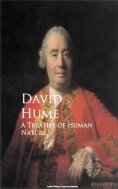
David Hume: The Collected Works
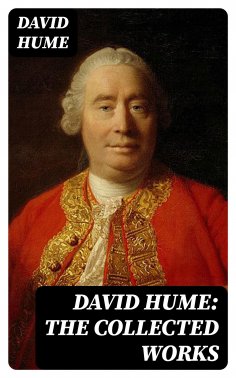


About the eBook
David Hume: The Collected Works serves as a comprehensive repository of Hume's influential philosophical writings, encompassing his groundbreaking treatises on empiricism, skepticism, and human psychology. This anthology includes seminal works such as "A Treatise of Human Nature" and "An Enquiry Concerning Human Understanding," where Hume's literary style is marked by clarity and elegance, enhancing the accessibility of his often complex ideas. Set against the backdrop of the Enlightenment, the collection weaves together Hume's critique of rationalism and moral philosophy, presenting an intricate tapestry that interrogates the limitations of human reason and the nature of belief. David Hume (1711-1776) was a Scottish philosopher, historian, and economist whose intellectual pursuits were deeply embedded in the spirit of the Scottish Enlightenment. His experiences during this tumultuous period, alongside his associations with contemporaneous thinkers, fueled his exploration of the relationship between human experience and knowledge. Hume's insistence on empirical observation as the foundation of understanding emerged through both personal reflections and rigorous scholarly engagement, leading to innovative insights that reshaped Western philosophy. This collected volume is essential for any student of philosophy, ethics, or cognitive science, providing a foundational understanding of Hume's contributions that continue to resonate in contemporary debates. It offers readers an unparalleled opportunity to engage with the texts that have influenced generations and invites them to explore the complexities of human nature through the lens of one of history's most important thinkers.
In this enriched edition, we have carefully created added value for your reading experience:
- A comprehensive Introduction outlines these selected works' unifying features, themes, or stylistic evolutions.
- The Author Biography highlights personal milestones and literary influences that shape the entire body of writing.
- A Historical Context section situates the works in their broader era—social currents, cultural trends, and key events that underpin their creation.
- A concise Synopsis (Selection) offers an accessible overview of the included texts, helping readers navigate plotlines and main ideas without revealing critical twists.
- A unified Analysis examines recurring motifs and stylistic hallmarks across the collection, tying the stories together while spotlighting the different work's strengths.
- Reflection questions inspire deeper contemplation of the author's overarching message, inviting readers to draw connections among different texts and relate them to modern contexts.
- Lastly, our hand‐picked Memorable Quotes distill pivotal lines and turning points, serving as touchstones for the collection's central themes.
About the Author
David Hume (1711–1776) stands out as one of the most prominent figures in the history of Western philosophy, history, and economics. His erudition and breadth of knowledge were profound, highly influential in the age of Enlightenment and continue to resonate in contemporary intellectual discourse. His 'The Collected Works' is an essential compendium for anyone seeking to understand his rich contribution to philosophy, both empirically and skeptically. Born in Edinburgh, Scotland, Hume's writings span a vast range of topics from human nature and understanding to morals, economics, and religion. His 'A Treatise of Human Nature', although initially not well-received, laid the foundation for empiricist epistemology and became a seminal work in philosophical literature. Furthermore, 'An Enquiry Concerning Human Understanding' and 'An Enquiry Concerning the Principles of Morals' further delve into cognitive and ethical dimensions of human inquiry. Hume's historical accounts, most notably 'The History of England', though less philosophical, reveals his narrative skill and his analytical approach to the past. His literary style is often characterized by clear, measured prose and an uncommon ability to engage readers in the rigorous yet accessible analysis of complex philosophical concepts. Hume's influence extends beyond philosophy to the social sciences, where his ideas on causality, induction, and human nature continue to be of paramount relevance. His commitment to skepticism and naturalism has rendered his work timeless, maintaining his status as an intellectual titan whose thoughts and ideas are studied and revered to this day.
Related eBooks















![ebook: Ensayos morales [Selección]](https://media.readfy.com/cover/9788411485050/118/ensayos-morales-seleccion.jpg)



Product Details
Publisher: DigiCat
Genre: Sprache - Englisch
Language: English
Size: 826 Pages
Filesize: 1.4 MB
ISBN: 8596547397991
Published: Nov. 13, 2022