Stephen Hero (Annotated)


Über das eBook
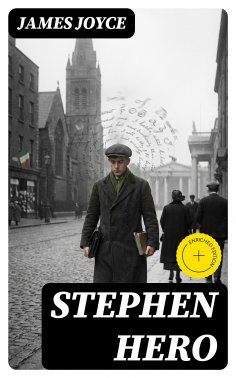
James Joyce's *Stephen Hero* is the surviving, unfinished precursor to *A Portrait of the Artist as a Young Man*, presenting Stephen Dedalus's intellectual and artistic formation in a more expansive, documentary mode. Set in Dublin and drawn from Joyce's own experiences, the novel follows Stephen as he resists Catholic, familial, and nationalist demands while developing an autonomous aesthetic philosophy. Its prose retains the conventions of late nineteenth-century realism, yet its autobiographical candor, discursive reflections, and early experiments with interiority anticipate the stylistic innovations of Joyce's mature fiction. The manuscript's fragmentary condition is itself significant: it reveals a transitional stage between conventional Bildungsroman and the radically self-conscious modernist narrative that would follow. Joyce composed *Stephen Hero* during the early years of his literary career, transforming personal conflict into an inquiry into artistic vocation. His estrangement from Irish Catholic culture, his debates with friends and family, and his emerging conviction that the artist must achieve independence all shape Stephen's arguments and experiences. The work also records Joyce's developing engagement with aesthetics, particularly the relation between perception, form, and artistic detachment. Readers interested in Joyce, modernism, autobiography, or the history of the Künstlerroman will find *Stephen Hero* especially rewarding. Though less polished than *A Portrait*, it offers unusually direct access to Joyce's creative process and clarifies how personal memory became literary experiment. It is best read not as a failed novel, but as an indispensable workshop for understanding Joyce's artistic maturation.
This enriched edition has been carefully crafted to add value to your reading experience.
- A comprehensive Introduction outlines these selected works' unifying features, themes, or stylistic evolutions.
- The Author Biography highlights personal milestones and literary influences that shape the entire body of writing.
- A Historical Context section situates the works in their broader era—social currents, cultural trends, and key events that underpin their creation.
- A concise Synopsis (Selection) offers an accessible overview of the included texts, helping readers navigate plotlines and main ideas without revealing critical twists.
- A unified Analysis examines recurring motifs and stylistic hallmarks across the collection, tying the stories together while spotlighting the different work's strengths.
- Reflection questions inspire deeper contemplation of the author's overarching message, inviting readers to draw connections among different texts and relate them to modern contexts.
- Lastly, our hand‐picked Memorable Quotes distill pivotal lines and turning points, serving as touchstones for the collection's central themes.
Über den Autor
James Joyce (1882–1941), an Irish novelist, short story writer, poet, and literary pioneer, is celebrated as one of the most influential and groundbreaking authors of the 20th century. His narrative innovations and psychological depth mark a significant departure from the conventional novel structure, giving him a prominent place in modernist literature. Joyce's early depiction of the Irish middle-class life came with his first work, 'Dubliners' (1914), a collection of short stories exploring the mundanity and complexities of Dublin's urban life. His semi-autobiographical novel 'A Portrait of the Artist as a Young Man' (1916) further introduced the character Stephen Dedalus, whose life is deeply explored in the posthumously-published 'Stephen Hero'. While 'Stephen Hero' offers a more expansive account of Joyce's alter ego, it is the reworked version, 'A Portrait of the Artist as a Young Man', that became part of the literary canon, laying the psychological and stylistic groundwork for his later works. Joyce's most monumental novel, 'Ulysses' (1922), a landmark work in the stream-of-consciousness narrative, reimagined the Homeric Odyssey through the experiences of its protagonist Leopold Bloom in Dublin. Joyce's last major work, 'Finnegans Wake' (1939), showcased his linguistic mastery through a complex, multilayered language that represented the flowing nature of dreams. Joyce's literary approach shaped not only Irish literature but also had a profound impact on the global narrative form. His contributions remain a subject of extensive scholarly research and discussion within literary circles worldwide.
Diese eBooks könnten Ihnen auch gefallen



Produkt Details
Verlag: DigiCat
Genre: Sprache - Englisch
Sprache: English
Umfang: 1684 Seiten
Größe: 1,3 MB
ISBN: 8596547003472
Veröffentlichung: 18. Mai 2022