Faust; a Tragedy, Translated from the German of Goethe (Annotated)


About the eBook
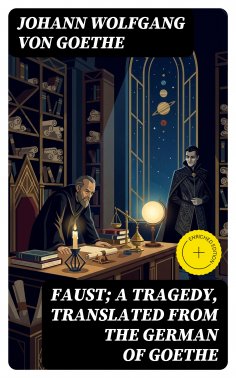
Goethe's *Faust; a Tragedy, Translated from the German of Goethe* presents the learned Faust's desperate wager with Mephistopheles, tracing his pursuit of limitless knowledge, sensual experience, and spiritual fulfillment. Combining philosophical drama, lyrical poetry, satire, romance, religious allegory, and elements of medieval legend, the work resists the conventions of a unified stage tragedy. Its shifting registers—from colloquial speech and popular song to learned allusion and visionary symbolism—embody the intellectual restlessness of German Romanticism while engaging the older Faust tradition and the moral questions of the Enlightenment. The Gretchen episode, in particular, gives the metaphysical contest a profoundly human dimension, exposing the consequences of desire, social judgment, and moral evasion. Johann Wolfgang von Goethe (1749–1832), one of the central figures of European literature, developed *Faust* over nearly six decades, from his youthful *Urfaust* to the completed second part published shortly before his death. His wide-ranging interests in law, science, classical antiquity, theology, politics, and the arts shaped the drama's encyclopedic ambition. The work also reflects Goethe's evolving understanding of individuality, nature, cultural inheritance, and redemption, as well as his sustained engagement with German intellectual life after the Enlightenment. This translation is essential reading for anyone interested in the formation of modern literature and the dramatic possibilities of philosophical poetry. It rewards readers drawn to epic ideas and vivid theatrical scenes alike, offering a work whose questions about knowledge, freedom, love, responsibility, and salvation remain as urgent as its language is imaginative.
This enriched edition has been carefully crafted to add value to your reading experience.
- A succinct Introduction situates the work's timeless appeal and themes.
- The Synopsis outlines the central plot, highlighting key developments without spoiling critical twists.
- A detailed Historical Context immerses you in the era's events and influences that shaped the writing.
- An Author Biography reveals milestones in the author's life, illuminating the personal insights behind the text.
- A thorough Analysis dissects symbols, motifs, and character arcs to unearth underlying meanings.
- Reflection questions prompt you to engage personally with the work's messages, connecting them to modern life.
- Hand‐picked Memorable Quotes shine a spotlight on moments of literary brilliance.
- Interactive footnotes clarify unusual references, historical allusions, and archaic phrases for an effortless, more informed read.
About the Author
Johann Wolfgang von Goethe (1749–1832) remains one of the towering figures in world literature, having left an indelible mark on the literary, philosophical, and artistic landscape of the late eighteenth and early nineteenth centuries. A versatile genius, Goethe's oeuvre encompasses poetry, drama, literature, theology, humanism, and science. Born in Frankfurt, Germany, his early education was extensive, setting the stage for a lifetime of learning and creation. Goethe's magnum opus, 'Faust; a Tragedy' (1808), synthesizes his profound exploration of human nature, morality, and the quest for knowledge. This dramatic work profoundly influenced the Romantic and subsequent movements, characterizing the struggle of the individual against an unfathomable universe. Translations of 'Faust' have made this canonical text accessible worldwide, encapsulating Goethe's rich, lyrical style and his capability to delve into the complexity of human existence. His literary style, marked by a synthesis of realism and romanticism, redefined the scope of German literature and literature at large. Not just a man of letters, Goethe was also deeply involved in studies of natural science and his 'Theory of Colours' challenged none other than Newton's optics. As a statesman, he actively participated in the Weimar Court, which provided a practical counterbalance to his literary pursuits. Today, Goethe's work still resonates, with scholars and readers alike pondering the depths of his insight into the human condition.
Related eBooks




















Product Details
Publisher: DigiCat
Genre: Sprache - Englisch
Language: English
Size: 194 Pages
Filesize: 724.6 KB
ISBN: 8596547045212
Published: June 2, 2022