Hadrian the Seventh (Annotated)
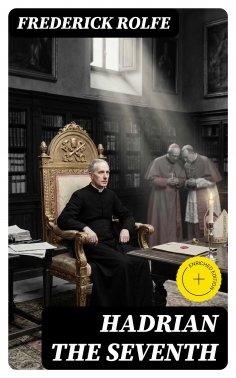


Über das eBook
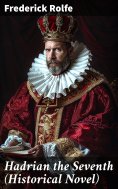
Frederick Rolfe's *Hadrian the Seventh* (1904) is an audacious blend of ecclesiastical fantasy, political satire, autobiography, and decadent romance. Its protagonist, George Arthur Rose—a disaffected Englishman with artistic ambitions and a profound sense of grievance—is unexpectedly elected pope and assumes the name Hadrian VII. From the Vatican, he pursues sweeping reforms in church administration, international politics, and social ethics, transforming personal resentment into an immense program of imaginative justice. Rolfe's ornate, archaic prose, elaborate ceremonial detail, epistolary passages, and flamboyant rhetoric place the novel within late Victorian decadence, while its wish-fulfillment structure recalls both the papal fantasy and the nineteenth-century tradition of satirical utopian fiction. The book's extravagance is therefore deliberate: it exposes the tensions between spiritual authority, institutional power, and wounded individual genius. Rolfe, who published much of his work under the name Baron Corvo, was an intensely cultivated, self-mythologizing, and socially embattled figure. His unsuccessful efforts to enter the Roman Catholic priesthood, his conversion to Catholicism, and his repeated conflicts with patrons and ecclesiastical authorities supplied the novel with both its religious knowledge and its unusually sharp emotional charge. Rose's ascent can be read as Rolfe's theatrical reimagining of exclusion and vindication. Readers interested in decadent literature, Catholic cultural history, political theology, or psychologically charged satire will find *Hadrian the Seventh* unforgettable. Its eccentricity can challenge modern expectations, but its imaginative scale, verbal brilliance, and penetrating study of grievance make it a singular work of early twentieth-century fiction.
This enriched edition has been carefully crafted to add value to your reading experience.
- A succinct Introduction situates the work's timeless appeal and themes.
- The Synopsis outlines the central plot, highlighting key developments without spoiling critical twists.
- A detailed Historical Context immerses you in the era's events and influences that shaped the writing.
- A thorough Analysis dissects symbols, motifs, and character arcs to unearth underlying meanings.
- Reflection questions prompt you to engage personally with the work's messages, connecting them to modern life.
- Hand‐picked Memorable Quotes shine a spotlight on moments of literary brilliance.
- Interactive footnotes clarify unusual references, historical allusions, and archaic phrases for an effortless, more informed read.
Über den Autor
Frederick Rolfe, also known as Baron Corvo, was a unique figure in English literature known for his eccentricity and the novel 'Hadrian the Seventh.' Born on July 22, 1860, in London, Rolfe's life was one of fluctuating fortunes and constant wanderings. Rolfe's literary creations are marked by his elaborate prose style and the recurrent themes of personal fantasy and Roman Catholicism. His most renowned work, 'Hadrian the Seventh' (1904), stands as a remarkable concoction of satirical fantasy and autobiographical elements. In this novel, an outcast English writer, much like Rolfe himself, is unexpectedly elected Pope. Through this allegorical narrative, Rolfe expresses his complex relationship with the Church; he had converted to Catholicism in the 1880s and unsuccessfully sought to become a priest, an experience that left him embittered and profoundly influenced his literary output. Rolfe's inimitable style coupled with his self-fashioned persona, complete with the assumed title of 'Baron,' has granted him a distinctive place in literature. His works are studied for their idiosyncratic artistry and insight into the psychobiographical dimensions of his life, marked by conceit, failed priestly ambitions, and penury. Despite a life plagued by financial hardship and a reputation that oscillated between genius and charlatan, Frederick Rolfe died in relative obscurity in Venice on October 25, 1913, leaving behind a unique and indelible mark on English letters.
Diese eBooks könnten Ihnen auch gefallen
Produkt Details
Verlag: DigiCat
Genre: Sprache - Englisch
Sprache: English
Umfang: 329 Seiten
Größe: 901,7 KB
ISBN: 8596547388609
Veröffentlichung: 13. November 2022