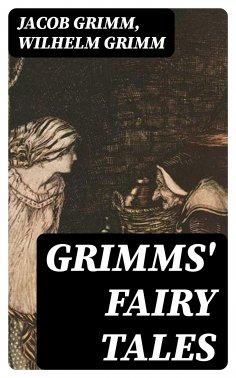
Grimms' Fairy Tales


Über das eBook
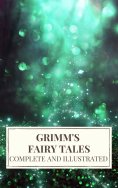
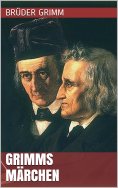
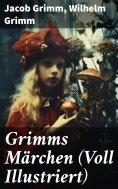
Grimms' Fairy Tales is a timeless anthology capturing the essence of folklore with its sprawling and enchanting narratives, extending their roots deep into the cultural and psychological fabrics of society. This collection showcases a vast array of thematic elements — from the eternal struggle between good and evil to the transformative power of true love and the wisdom imparted through trial and tribulation. The anthology's diverse literary styles range from stark simplicity to richly woven symbolic tapestries that resonate across both nostalgic and contemporary realms. Standout tales engage readers with their compelling narratives that invite interpretation and reflection, mirroring human experiences through allegorical twists and turns. Authored by Jacob and Wilhelm Grimm, pillars of the Brothers Grimm, this collection stands as a landmark in the preservation and celebration of oral traditions. Their meticulous dedication to collecting and refining these stories has not only safeguarded cultural heritage but has also aligned the collection with the Romantic era's emphasis on the importance of folklore. Through collated works drawn from myriad traditions, the Grimms imbue the tales with a collective voice that transcends national boundaries, fostering a shared cultural consciousness that is both enlightening and delightful. A staple for any reader keen on exploring the intersections of narrative art across cultures, Grimms' Fairy Tales invites readers into a world of wonder and moral contemplation. This anthology serves as a conduit between past traditions and modern interpretations, offering a compendium of insights that span generations. Readers are encouraged to dive into this collection for its profound educational value, rich storytelling, and the engaging dialogue it provokes between each tale, providing timeless wisdom and entertainment for audiences of all ages.
In this enriched edition, we have carefully created added value for your reading experience:
- A comprehensive Introduction outlines these selected works' unifying features, themes, or stylistic evolutions.
- The Author Biography highlights personal milestones and literary influences that shape the entire body of writing.
- A Historical Context section situates the works in their broader era—social currents, cultural trends, and key events that underpin their creation.
- A concise Synopsis (Selection) offers an accessible overview of the included texts, helping readers navigate plotlines and main ideas without revealing critical twists.
- A unified Analysis examines recurring motifs and stylistic hallmarks across the collection, tying the stories together while spotlighting the different work's strengths.
- Reflection questions inspire deeper contemplation of the author's overarching message, inviting readers to draw connections among different texts and relate them to modern contexts.
- Lastly, our hand‐picked Memorable Quotes distill pivotal lines and turning points, serving as touchstones for the collection's central themes.
Über den Autor
Jacob Grimm (1785–1863) was a German philologist, jurist, and mythologist, most notably recognized for his collaboration with his brother Wilhelm in the collection of folklore. Jacob, the elder of the storied Grimm brothers, was born on January 4, 1785, in Hanau, Hesse-Kassel. He studied law at the University of Marburg, where he developed a fervent interest in history and philology, which would later drive his scholarly endeavours. Together with his brother, Jacob compiled 'Grimms' Fairy Tales' (originally 'Kinder- und Hausmärchen'), an anthology that became a seminal work in the world of folklore and storytelling. This collection, first published in 1812, has left an indelible mark on Western literature and has been translated into numerous languages, enchanting generations of children and adults alike. His works were instrumental in developing the literary genre known as fairy tales, a form characterized by moral lessons, fantastical elements, and captivating narrative techniques. Beyond his contributions to folklore, Jacob Grimm was a key figure in the development of Germanic linguistics and was one of the founding fathers of German studies. His work in linguistics is reflected in 'Deutsche Grammatik' (German Grammar), a comprehensive study that laid the groundwork for the systematic study of Germanic languages. Grimm's law, a principle describing the sound shifts in the development of Proto-Indo-European languages, also bears his name. Jacob Grimm's influence extends into various academic fields, evidencing the profound interdisciplinary impact of his and his brother's collective efforts in cultural and linguistic studies.
Diese eBooks könnten Ihnen auch gefallen




Produkt Details
Verlag: DigiCat
Genre: Sprache - Englisch
Sprache: English
Umfang: 228 Seiten
Größe: 972,8 KB
ISBN: 8596547325833
Veröffentlichung: 16. September 2022