Moral Science; a Compendium of Ethics (Annotated)


Über das eBook
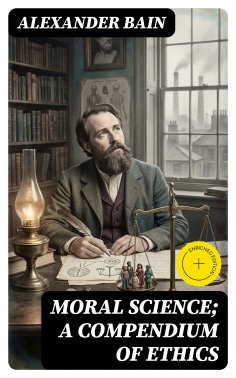
Alexander Bain's *Moral Science; a Compendium of Ethics* offers a systematic survey of ethical thought that joins philosophical analysis with the emerging language of psychology. Moving from the foundations of moral judgment through motives, character, responsibility, conscience, and the organization of social life, Bain examines how pleasure, pain, desire, habit, and education shape conduct. Its method is lucid, classificatory, and empirically minded rather than speculative, placing the work within the nineteenth-century British tradition of associationism and utilitarian ethics. The book's concise, instructional form reflects the Victorian compendium while preserving a serious engagement with enduring questions concerning free will, obligation, virtue, and the relation between individual welfare and the common good. Bain (1818–1903) was a Scottish philosopher, psychologist, educator, and influential interpreter of John Stuart Mill. His work developed the associationist account of mind, emphasizing the formative powers of sensation, repetition, emotion, and social environment. These commitments clearly inform his ethics: morality is treated not as an isolated system of transcendental commands but as a human practice cultivated through experience, education, sentiment, and institutions. Written amid intense nineteenth-century debates over science, evolution, reform, and utilitarianism, the book reveals Bain's effort to give moral philosophy a naturalistic and psychologically credible foundation. This volume is especially valuable for readers seeking to understand Victorian moral philosophy at the point where classical ethical theory meets modern psychology and social science. Students of utilitarianism, British empiricism, moral education, and the history of psychology will find in it both a coherent ethical synthesis and a revealing document of its intellectual age. Its disciplined structure makes complex debates accessible, while its empirical assumptions invite critical reflection on the possibilities and limits of grounding morality in human nature and social development.
This enriched edition has been carefully crafted to add value to your reading experience.
- A succinct Introduction situates the work's timeless appeal and themes.
- The Synopsis outlines the central plot, highlighting key developments without spoiling critical twists.
- A detailed Historical Context immerses you in the era's events and influences that shaped the writing.
- A thorough Analysis dissects symbols, motifs, and character arcs to unearth underlying meanings.
- Reflection questions prompt you to engage personally with the work's messages, connecting them to modern life.
- Hand‐picked Memorable Quotes shine a spotlight on moments of literary brilliance.
- Interactive footnotes clarify unusual references, historical allusions, and archaic phrases for an effortless, more informed read.
Über den Autor
Alexander Bain (1818–1903) was a prominent Scottish philosopher and educationalist of the 19th century who made significant contributions to the fields of philosophy, psychology, and pedagogy. A prolific writer and thinker, Bain was instrumental in establishing and advancing the study of the mind through empirical research, a practice that laid early groundwork for the field of psychology. Perhaps most well-known in the domain of ethics is his treatise 'Moral Science; a Compendium of Ethics' (1860), which provided a systematic account of ethical principles based on utilitarian lines, reinforcing the association of morality with human well-being and social utility. Bain's approach in this book reflects his overall empirical and associative philosophy, where he emphasizes the role of the human experience in the understanding of moral conduct. His writings often gave particular attention to the importance of education, aiming to improve practical teaching methods and grounding them in a scientific understanding of the human mind. Bain's intellectual pursuits were closely connected with the tradition of British empiricism, and he was greatly influenced by the works of John Stuart Mill. Through his broad philosophical perspective, Bain contributed significantly to Victorian intellectual life, leaving a lasting impact on the development of modern disciplines concerned with human behavior and morality.
Diese eBooks könnten Ihnen auch gefallen

Produkt Details
Verlag: DigiCat
Genre: Sprache - Englisch
Sprache: English
Umfang: 365 Seiten
Größe: 966,9 KB
ISBN: 8596547208761
Veröffentlichung: 4. September 2022