Youth (Annotated)
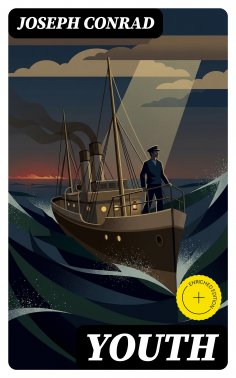


About the eBook
Joseph Conrad's "Youth" (1898) is a maritime tale narrated by Charles Marlow, who recalls his first command aboard the aging Judea and the disastrous voyage toward Bangkok. Recounted from the perspective of mature experience, the story juxtaposes youthful confidence with physical danger, bureaucratic failure, and the indifferent power of the sea. Conrad's impressionistic prose—dense with sensory detail, shifting temporal perspective, and vivid nautical vocabulary—turns adventure into an inquiry into memory, identity, and the imaginative myths of youth. Situated within late-Victorian sea literature yet already complicating its imperial romances, the tale reveals both the exhilaration and the precariousness underlying British maritime expansion. Conrad, born Józef Teodor Konrad Korzeniowski in Polish Ukraine, spent much of his early adulthood in the British merchant navy, experiences that furnished his fiction with an unusually authoritative knowledge of ships, labor, hierarchy, and oceanic travel. His multilingual background and outsider's relation to English culture also encouraged a distinctive, carefully wrought prose style. In "Youth," autobiographical maritime knowledge is transformed rather than merely reproduced: the older Marlow's recollection reflects Conrad's sustained interest in how experience becomes legend and how personal memory can preserve, distort, or redeem the past. This concise yet richly layered story is especially recommended to readers interested in maritime fiction, modernist narrative technique, and the moral ambiguities of empire. It offers the immediate pleasures of adventure while rewarding close attention to voice, irony, and historical context. "Youth" is an exemplary introduction to Conrad's art and to the complex relationship between youthful idealism and adult knowledge.
This enriched edition has been carefully crafted to add value to your reading experience.
- A comprehensive Introduction outlines these selected works' unifying features, themes, or stylistic evolutions.
- The Author Biography highlights personal milestones and literary influences that shape the entire body of writing.
- A Historical Context section situates the works in their broader era—social currents, cultural trends, and key events that underpin their creation.
- A concise Synopsis (Selection) offers an accessible overview of the included texts, helping readers navigate plotlines and main ideas without revealing critical twists.
- A unified Analysis examines recurring motifs and stylistic hallmarks across the collection, tying the stories together while spotlighting the different work's strengths.
- Reflection questions inspire deeper contemplation of the author's overarching message, inviting readers to draw connections among different texts and relate them to modern contexts.
- Lastly, our hand‐picked Memorable Quotes distill pivotal lines and turning points, serving as touchstones for the collection's central themes.
About the Author
Joseph Conrad, born Józef Teodor Konrad Korzeniowski on December 3, 1857, in Berdyczów, Russian Empire (now Berdychiv, Ukraine), was a literary colossus of the late 19th and early 20th centuries. Conrad's narrative style and anti-heroic characters have placed him as a forefather of modernist literature. His works often delve into the complexities of the human psyche and the ambiguities of moral righteousness. Conrad's experiences in the French and especially British merchant navies offered him a unique perspective on human nature, and this is evident in his writing. His novels often explore the struggles of man against the forces of nature as well as the human condition itself. 'Youth', a semi-autobiographical short story published in 1898, reflects Conrad's experiences at sea and is exemplary of his lyrical and sophisticated narrative style. It is in this narrative, alongside notable works such as 'Heart of Darkness' (1899) and 'Lord Jim' (1900), that Conrad's thematic concerns of betrayal, guilt, and existential angst are vividly brought to life. Conrad's ability to weave complex narratives with intricately developed characters has made his literature a staple in discussions of Western literature. His influence on the modernist novel is profound, with many later writers, such as F. Scott Fitzgerald and T.S. Eliot, recognizing Conrad's significant impact on their own work. Conrad continued to write until his death on August 3, 1924, leaving behind a legacy that continues to resonate with readers and scholars alike.
Related eBooks



![ebook: 50 Masterpieces you have to read before you die Vol: 1 [newly updated] (Golden Deer Classics)](https://media.readfy.com/cover/9788822859051/118/50-masterpieces-you-have-to-read-before-you-die-vol-1-newly-updated-golden-deer-classics.jpg)






Product Details
Publisher: DigiCat
Genre: Sprache - Englisch
Language: English
Size: 340 Pages
Filesize: 752.4 KB
ISBN: 8596547001386
Published: May 25, 2022