Principles of Orchestration, with Musical Examples Drawn from His Own Works
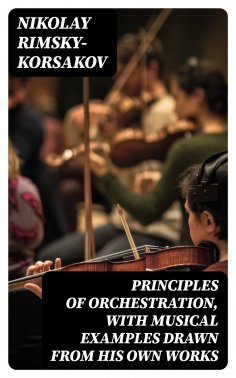


Über das eBook
In "Principles of Orchestration, with Musical Examples Drawn from His Own Works," Nikolay Rimsky-Korsakov presents an insightful exploration of orchestration techniques, weaving together theoretical understanding and practical application. The book balances detailed discussions of orchestral color, texture, and instrumental capabilities with numerous musical examples, primarily sourced from his illustrious compositions. Rimsky-Korsakov's prose harmonizes instructive clarity and artistic eloquence, making it a quintessential guide for both aspiring composers and seasoned musicians. Set against the backdrop of late 19th-century Russian music, this work reflects the period's burgeoning experimentation with orchestral sound and texture, mirroring Rimsky-Korsakov's innovative contributions to the genre. Nikolay Rimsky-Korsakov, a leading figure of the Russian nationalist movement, dedicated much of his life to melding folk traditions with classical forms. His upbringing in a military family, coupled with his extensive education at the St. Petersburg Conservatory, provided him a unique lens through which to examine orchestral writing. His experiences as a naval officer and inherent passion for storytelling through music profoundly influenced his teaching and compositional style, culminating in this seminal work aimed at democratizing orchestration knowledge. I wholeheartedly recommend "Principles of Orchestration" to both contemporary musicians and composers who seek a deeper understanding of orchestral arrangement. Its thorough yet accessible structure makes it invaluable for all who wish to enrich their appreciation of orchestral music, and its relevance continues to resonate in today's musical discourse.
In this enriched edition, we have carefully created added value for your reading experience:
- A succinct Introduction situates the work's timeless appeal and themes.
- The Synopsis outlines the central plot, highlighting key developments without spoiling critical twists.
- A detailed Historical Context immerses you in the era's events and influences that shaped the writing.
- An Author Biography reveals milestones in the author's life, illuminating the personal insights behind the text.
- A thorough Analysis dissects symbols, motifs, and character arcs to unearth underlying meanings.
- Reflection questions prompt you to engage personally with the work's messages, connecting them to modern life.
- Hand‐picked Memorable Quotes shine a spotlight on moments of literary brilliance.
- Interactive footnotes clarify unusual references, historical allusions, and archaic phrases for an effortless, more informed read.
Über den Autor
Nikolay Rimsky-Korsakov (1844-1908) was a pivotal figure in Russian classical music, particularly during the Romantic period. As a member of the 'Mighty Handful', a group of five Russian nationalist composers, Rimsky-Korsakov dedicated himself to developing a distinct national style of classical music. He was not only a prolific composer, but also an esteemed teacher and theorist. His theoretical work, 'Principles of Orchestration' ('Grundlagen der Orchestration'), stands as a monumental testament to his pedagogical commitment and deep understanding of musical textures. This seminal text, completed by his student Maximilian Steinberg, offers invaluable insights into the art of orchestration using examples from Rimsky-Korsakov's rich repertoire. Known for his meticulous approach to composition and orchestration, his works often feature vibrant colors and expert use of woodwind and brass, a testament to his profound influence on the Russian orchestral tradition. Rimsky-Korsakov's literary contribution extends beyond textbooks, as he also penned an autobiography, 'My Musical Life', which not only illuminates his own career but also offers an intimate look at the musical milieu of 19th-century Russia. His extensive oeuvre, which includes operas such as 'The Golden Cockerel' and 'Sadko', as well as symphonic works like 'Scheherazade', embodies the quintessence of his rich harmonic language and imaginative orchestration, making him an indelible icon in the realm of the classical music canon.
Diese eBooks könnten Ihnen auch gefallen
Produkt Details
Verlag: DigiCat
Genre: Sprache - Englisch
Sprache: English
Umfang: 3 Seiten
Größe: 813,3 KB
ISBN: 8596547020929
Veröffentlichung: 29. Mai 2022