Marius the Epicurean (Vol. 1&2) (Annotated)
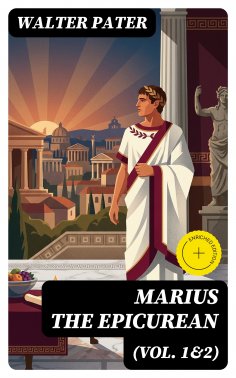


About the eBook
Walter Pater's Marius the Epicurean (1885), presented here in two volumes, is a philosophical and historical Bildungsroman set during the comparatively peaceful reign of the Antonine emperors. It follows Marius, a sensitive young Roman, through education, travel, friendship, religious inquiry, and encounters with both pagan ritual and the emerging Christian community. Pater's richly meditative prose transforms antiquity into an aesthetic and spiritual landscape, combining archaeological detail, classical allusion, and finely controlled descriptions of sensation. The novel belongs to the late Victorian tradition of historical romance while also exemplifying the aesthetic movement's concern with beauty, inward experience, and the disciplined cultivation of life. Its narrative gradually tests Epicurean pleasure against Stoic ethics and Christian self-sacrifice, without reducing these alternatives to simple doctrinal conclusions. Pater (1839–1894), an Oxford don, essayist, and central theorist of English Aestheticism, wrote against the moralizing conventions of conventional Victorian criticism. His studies of Renaissance art and classical culture, together with his reflections on the intensity and brevity of experience, deeply inform Marius. The novel also reflects his sustained interest in how individuals construct meaning amid cultural and religious change, making its ancient setting a subtle vehicle for modern intellectual concerns. Marius the Epicurean is especially rewarding for readers interested in classical reception, Victorian literary history, religious thought, and prose style. It invites slow reading, offering not merely a story of spiritual development but an exquisitely nuanced meditation on beauty, conscience, mortality, and the possibilities of humane belief.
This enriched edition has been carefully crafted to add value to your reading experience.
- A succinct Introduction situates the work's timeless appeal and themes.
- The Synopsis outlines the central plot, highlighting key developments without spoiling critical twists.
- A detailed Historical Context immerses you in the era's events and influences that shaped the writing.
- A thorough Analysis dissects symbols, motifs, and character arcs to unearth underlying meanings.
- Reflection questions prompt you to engage personally with the work's messages, connecting them to modern life.
- Hand‐picked Memorable Quotes shine a spotlight on moments of literary brilliance.
- Interactive footnotes clarify unusual references, historical allusions, and archaic phrases for an effortless, more informed read.
About the Author
Walter Pater, born on August 4, 1839, in Shadwell, London, was a notable figure in the 19th-century literary world, renowned for his essays on art, literature, and society. He is best remembered today for his precise and poetic prose, his role in the Aesthetic Movement, and his influence on the works of Oscar Wilde and other late Victorian writers. Pater's 'Marius the Epicurean', a philosophical novel released in two volumes in 1885, is a notable work of fiction that reflects his interest in the interplay between life and art, and the pursuit of beauty. The novel explores the spiritual and intellectual development of its protagonist, Marius, in the setting of ancient Rome, embodying Pater's ideas on aestheticism and the philosophies of Epicureanism and Stoicism. Considered one of the erudite scholars of his time, Pater attended Queen's College, Oxford, where he later embarked on a career as a university tutor. His eloquent lectures and writings, such as his first major work, 'Studies in the History of the Renaissance' (1873), lay the foundation for his literary style, which emphasizes the sensory experience of art and life. Pater's work often oscillates between the realms of criticism and fiction, thereby blurring the boundaries of genres. He was, in essence, an advocate for the pursuit of intellectual and aesthetic pleasures. Pater passed away on July 30, 1894, leaving behind a legacy marked by his exploration of the aesthetic experience and his contribution to Victorian literature.
Related eBooks








Product Details
Publisher: DigiCat
Genre: Sprache - Englisch
Language: English
Size: 292 Pages
Filesize: 913.8 KB
ISBN: 8596547734857
Published: Nov. 27, 2023