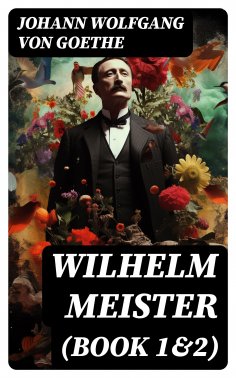
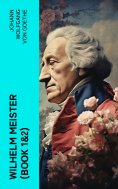
Wilhelm Meister (Book 1&2)


About the eBook
In 'Wilhelm Meister's Apprenticeship,' Johann Wolfgang von Goethe masterfully intertwines a semi-biographical narrative with the bildungsroman tradition, exploring the journey of young Wilhelm Meister as he grapples with self-discovery and the pursuit of artistic fulfillment. Goethe employs a rich, lyrical prose style that evokes the emotional complexities of the characters while engaging with the philosophical ideas prevalent during the Sturm und Drang movement and the early Romantic period. This multi-layered work delves into themes of education, personal growth, and the interplay of societal expectations versus individual aspirations, reflecting the tensions of an evolving Germany during the late 18th century. Goethe, a polymath of the German literary scene, drew upon his own diverse experiences in the arts, politics, and personal relationships to craft a narrative that is deeply reflective of the human condition. His exploration of the interplay between the personal and the artistic journey is indicative of his own life, marked by a constant quest for meaning beyond mere societal conventions. Through these autobiographical parallels, Goethe positions himself as both a mentor and a seeker, engaged in the universal struggle of finding one's place in the world. 'Wilhelm Meister' is highly recommended for readers interested in the intricate dynamics of personal evolution and the artistic spirit. Its philosophical insights and lyrical beauty invite readers to reflect deeply upon their own paths, making this novel not only a significant literary work but also a timeless exploration of selfhood. Whether one is a newcomer to Goethe or fully immersed in his legacy, this book serves as a compelling entry point into the depths of human experience.
In this enriched edition, we have carefully created added value for your reading experience:
- A comprehensive Introduction outlines these selected works' unifying features, themes, or stylistic evolutions.
- The Author Biography highlights personal milestones and literary influences that shape the entire body of writing.
- A Historical Context section situates the works in their broader era—social currents, cultural trends, and key events that underpin their creation.
- A concise Synopsis (Selection) offers an accessible overview of the included texts, helping readers navigate plotlines and main ideas without revealing critical twists.
- A unified Analysis examines recurring motifs and stylistic hallmarks across the collection, tying the stories together while spotlighting the different work's strengths.
- Reflection questions inspire deeper contemplation of the author's overarching message, inviting readers to draw connections among different texts and relate them to modern contexts.
- Lastly, our hand‐picked Memorable Quotes distill pivotal lines and turning points, serving as touchstones for the collection's central themes.
About the Author
Johann Wolfgang von Goethe (1749-1832) was a towering figure in German literature and is considered by many to be one of the greatest writers in Western literature. Born in Frankfurt, Goethe's body of work spans poetry, drama, literature, theology, humanism, science, and philosophy. A key figure of German Romanticism, his works reflect both the profundities of human experience and the comprehensive nature of his intellect. Goethe's 'Wilhelm Meister's Apprenticeship' and its sequel 'Wilhelm Meister's Journeyman Years' (commonly referred to as Wilhelm Meister Books 1 & 2) are seminal novels in the canon of European Bildungsroman literature, showcasing the protagonist's emotional and intellectual development. The former, originally published in 1795-96, marked an evolution in the novel format and deeply influenced subsequent coming-of-age stories. His literary style in these works combines rich character development with philosophical discourse, illustrating Goethe's preoccupation with personal growth and the tensions between societal expectations and individual self-discovery. Goethe's Wilhelm Meister novels have been subjected to extensive critical analysis and are frequently referenced for their contribution to the concept of Bildung, or self-cultivation, which became a central idea in German culture. His influence extends beyond literature; Goethe's insights into human nature and society continue to resonate, making his work timeless and universally relevant.
Related eBooks









Product Details
Publisher: DigiCat
Genre: Sprache - Englisch
Language: English
Size: 1048 Pages
Filesize: 1.5 MB
ISBN: 8596547715658
Published: Nov. 8, 2023