The Storm. An Essay (Annotated)


About the eBook
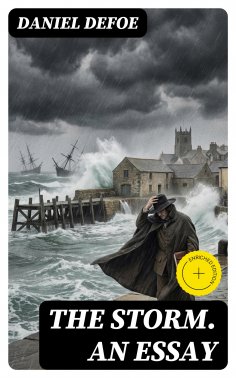
Daniel Defoe's *The Storm: An Essay* (1704) is a pioneering work of English disaster writing, documenting the Great Storm of November 1703, one of the most destructive tempests in British history. Combining eyewitness testimony, letters, official reports, lists of casualties, and vivid scenes of maritime and terrestrial devastation, Defoe transforms a natural catastrophe into a sustained meditation on evidence, providence, and social vulnerability. Its heterogeneous form—part newspaper compilation, part moral reflection, and part proto-journalistic investigation—anticipates modern reportage while retaining the providential assumptions of Restoration literature. The work's accumulation of particulars gives force to its argument: calamity is best understood through the experiences of ordinary people as well as through abstract theological explanation. Defoe (c. 1660–1731), a Nonconformist merchant, political pamphleteer, journalist, and later novelist, brought to this project an unusual combination of commercial practicality, literary ambition, and firsthand familiarity with public controversy. Writing in the intellectually restless period following the Glorious Revolution, he was deeply interested in how information circulated and how national crises exposed political, economic, and moral structures. His appeal to readers for their own accounts makes *The Storm* a collaborative enterprise and reflects his conviction that reliable public knowledge could be assembled from dispersed testimony. This book is especially recommended to readers interested in the origins of journalism, environmental humanities, disaster studies, and the development of the modern novel. It offers both a compelling historical record and a subtle study of how communities narrate catastrophe, making it indispensable for understanding Defoe's nonfictional imagination and the documentary foundations of his later fiction.
This enriched edition has been carefully crafted to add value to your reading experience.
- A succinct Introduction situates the work's timeless appeal and themes.
- The Synopsis outlines the central plot, highlighting key developments without spoiling critical twists.
- A detailed Historical Context immerses you in the era's events and influences that shaped the writing.
- An Author Biography reveals milestones in the author's life, illuminating the personal insights behind the text.
- A thorough Analysis dissects symbols, motifs, and character arcs to unearth underlying meanings.
- Reflection questions prompt you to engage personally with the work's messages, connecting them to modern life.
- Hand‐picked Memorable Quotes shine a spotlight on moments of literary brilliance.
About the Author
Daniel Defoe, born around 1660 in London, England, is recognized as one of the early proponents of the English novel. Defoe embarked on a diverse array of vocations, including merchant, soldier, and political agent before turning to writing. Often lauded for his seminal work 'Robinson Crusoe', Defoe's prolific output extends to over 300 works ranging from satirical poems, economic writings, to journalistic pieces. A lesser-known yet significant work is 'The Storm, An Essay,' where Defoe employs a reportage style to detail the catastrophic storm that struck England in 1703, showcasing his concern with natural phenomena and their impact on human society. His literary style is marked by realistic narrative voices and detailed settings, shaped by his keen observations of contemporary life. Defoe's utilization of fiction to explore morals, society, and the human condition dovetails with the Enlightenment ideals of his time, positioning him as a crucial figure in the evolution of the English novel. His works continue to be studied for their literary innovation and social commentary, offering insights into the socio-economic climate of early 18th-century Britain.
Related eBooks



![ebook: 50 Masterpieces you have to read before you die Vol: 2 [newly updated] (Golden Deer Classics)](https://media.readfy.com/cover/9788822867056/118/50-masterpieces-you-have-to-read-before-you-die-vol-2-newly-updated-golden-deer-classics.jpg)



Product Details
Publisher: DigiCat
Genre: Sprache - Englisch
Language: English
Size: 106 Pages
Filesize: 738.9 KB
ISBN: 8596547314851
Published: Sept. 15, 2022