Rationalism (Annotated)
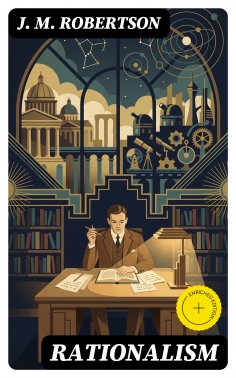


About the eBook
In *Rationalism*, J. M. Robertson presents a vigorous historical and critical account of the intellectual movement that places reason, evidence, and independent inquiry above ecclesiastical authority and inherited dogma. Rather than treating rationalism as a merely abstract philosophy, he traces its development through religious controversy, scientific advance, biblical criticism, and changing conceptions of morality. The book combines lucid exposition with the polemical energy of the freethought tradition, bringing historical scholarship and philosophical analysis to bear on the claims of supernatural religion. Its method reflects the late Victorian and early twentieth-century culture of secular criticism, in which the authority of tradition was increasingly tested against comparative history, scientific knowledge, and the ideals of intellectual freedom. Robertson (1856–1933) was a Scottish journalist, literary critic, political writer, and prominent advocate of rationalism and freethought. His wide-ranging studies of Christianity, mythology, literature, and social reform equipped him to connect philosophical questions with the historical forces that shape belief. Writing in an age marked by Darwinism, higher biblical criticism, and debates over secular ethics, he regarded rational inquiry not simply as skepticism but as a constructive discipline for public and private life. *Rationalism* thus condenses the central commitments that informed his broader career: hostility to dogmatic authority, confidence in historical investigation, and faith in the emancipatory power of reason. This book will reward readers interested in the history of secular thought, the intellectual origins of modern religious criticism, and the relationship between reason and social progress. Its arguments remain valuable both as a substantial statement of early modern rationalist thought and as a document of the period's debates over science, religion, and moral autonomy. Readers should approach it as both a work of interpretation and a historically situated intellectual intervention—one whose clarity, breadth, and argumentative confidence continue to provoke reflection.
This enriched edition has been carefully crafted to add value to your reading experience.
- A succinct Introduction situates the work's timeless appeal and themes.
- The Synopsis outlines the central plot, highlighting key developments without spoiling critical twists.
- A detailed Historical Context immerses you in the era's events and influences that shaped the writing.
- A thorough Analysis dissects symbols, motifs, and character arcs to unearth underlying meanings.
- Reflection questions prompt you to engage personally with the work's messages, connecting them to modern life.
- Hand‐picked Memorable Quotes shine a spotlight on moments of literary brilliance.
- Interactive footnotes clarify unusual references, historical allusions, and archaic phrases for an effortless, more informed read.
About the Author
John Mackinnon Robertson (1856-1933) was a prolific British writer, journalist, and rationalist thinker whose intellectual contributions spanned numerous fields including politics, religion, literature, and philosophy. Born on the Isle of Man, Robertson left school at an early age to embark on what would become a lifetime of self-education and writing. He was particularly known for his critical stance against religious dogma and for his advocacy of secularism and rationalist thought. His work 'Rationalism' epitomizes this perspective, presenting a rigorous analysis and critique of the religious doctrines of his time, aimed at promoting a worldview grounded in reason and empirical evidence. Robertson's literary style is characterized by a clear, analytic approach that sought to dismantle nonscientific beliefs and promote a rationalist outlook on social and philosophical matters. Throughout his life, Robertson was associated with the freethought movement and contributed to periodicals such as the 'Westminster Review'. His extensive bibliography includes titles like 'A Short History of Freethought', reflecting his commitment to the development and dissemination of rationalist ideas. His writings continue to be studied for their role in the intellectual currents of the late 19th and early 20th centuries, marking him as a noteworthy figure in the history of secularism and rationalist thought.
Related eBooks


Product Details
Publisher: DigiCat
Genre: Sprache - Englisch
Language: English
Size: 47 Pages
Filesize: 705.7 KB
ISBN: 8596547139546
Published: Aug. 1, 2022