The Mob Mentality


About the eBook
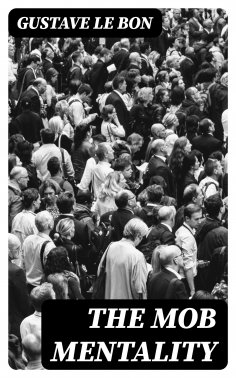
In "The Mob Mentality," Gustave Le Bon delves into the psychological processes that govern collective behavior, particularly in crowds. Through meticulous observation and analysis, Le Bon employs a keen literary style that interweaves empirical evidence with philosophical discourse. His exploration of how individual rationality can dissolve in the face of crowd dynamics provides a foundational understanding of social psychology, echoing themes prevalent in post-19th century scientific inquiry. This work is situated in the broader context of emerging social theories during the period, intersecting with both sociology and psychology to illuminate the forces that shape human actions in group settings. Gustave Le Bon was a pioneering French social psychologist, whose extensive background in medicine and anthropology informed his insights into collective human behavior. His experiences observing political movements and social unrest inspired him to explore how anonymity and emotional intensity in crowds can lead to irrational actions. This book reflects Le Bon's concern with the implications of mob psychology in the face of modernity and the potential dangers it poses to societal structures. "The Mob Mentality" is an essential read for anyone interested in understanding the intricate interplay between individual psychology and collective behavior. Le Bon's incisive analysis not only enriches our comprehension of social dynamics but also serves as a prescient warning about the influence of mass movements in contemporary society.
In this enriched edition, we have carefully created added value for your reading experience:
- A comprehensive Introduction outlines these selected works' unifying features, themes, or stylistic evolutions.
- The Author Biography highlights personal milestones and literary influences that shape the entire body of writing.
- A Historical Context section situates the works in their broader era—social currents, cultural trends, and key events that underpin their creation.
- A concise Synopsis (Selection) offers an accessible overview of the included texts, helping readers navigate plotlines and main ideas without revealing critical twists.
- A unified Analysis examines recurring motifs and stylistic hallmarks across the collection, tying the stories together while spotlighting the different work's strengths.
- Reflection questions inspire deeper contemplation of the author's overarching message, inviting readers to draw connections among different texts and relate them to modern contexts.
- Lastly, our hand‐picked Memorable Quotes distill pivotal lines and turning points, serving as touchstones for the collection's central themes.
About the Author
Gustave Le Bon, born on May 7, 1841, in Nogent-le-Rotrou, France, and deceased on December 13, 1931, was a pioneering figure in social psychology. He was trained as a physician but his interests spanned anthropology, sociology, psychology, as well as physics. His work significantly influenced the field of crowd psychology, and he is best known for his seminal book 'Psychologie des Foules' (1895), translated as 'The Crowd: A Study of the Popular Mind', which laid the groundwork for his theories on collective behavior. Although 'The Mob Mentality' is often cited as a book written by Le Bon, it is likely a misconception or confusion with his famous 'The Crowd,' which discusses how individual reasoning is swayed, and even dominated, by group dynamics and the collective mindset of crowds. His assertions on the irrationality of crowds and the sway of charismatic leaders were innovative for his time, and his analysis on the psychological characteristics of crowds remains influential. His works delve into topics such as the loss of personal responsibility in groups, the role of leaders in directing crowds, and the impact of race and traditions on the mindset of peoples. Le Bon's ideas have been both celebrated and criticized, yet his contributions to social theory continue to be studied and referenced in scholarly discussions on mass psychology and sociology. Not only did Le Bon's theoretical constructs provide a groundwork for understanding crowd psychology, but they also paved the way for later theories on group dynamics and mass movements. His literary style is characterized by sharp observations and a prescient understanding of the effects of mass communication and herd behavior, themes still relevant to contemporary sociological and psychological research.
Related eBooks























Product Details
Publisher: DigiCat
Genre: Sprache - Englisch
Language: English
Size: 378 Pages
Filesize: 986.5 KB
ISBN: 8596547004240
Published: May 17, 2022