Puck of Pook's Hill



About the eBook
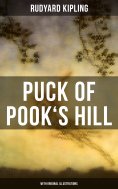
In "Puck of Pook's Hill," Rudyard Kipling weaves a captivating tapestry of English folklore and history, blending fantasy and realism in a manner that invites readers into the magical realm of Sussex. The narrative revolves around two children, Dan and Una, who, while playing in the lush countryside, encounter Puck—a mischievous spirit who brings historical characters to life. Richly imbued with Kipling's signature storytelling, the book contrasts the innocence of childhood with profound historical themes, showcasing the author's adeptness with narrative forms and his ability to invoke the sublime beauty of England's landscapes profoundly. The episodic structure allows for a seamless interplay between myth, nature, and literary allusions, placing it firmly within the late Victorian literary revival that sought to reconnect with indigenous British folklore. Rudyard Kipling, born in India, was deeply influenced by the stories and cultural narratives of both his Indian upbringing and his English heritage. This duality informed much of his work, and in "Puck of Pook's Hill," he showcases his fascination with stories that transcend time and encapsulate the essence of national identity. Kipling's life experiences, including time spent in the English countryside, lend authenticity to the vivid landscapes and rich characterizations in this enchanting work. "Puck of Pook's Hill" is highly recommended for readers who appreciate the convergence of history and fantasy, as well as those intrigued by traditional storytelling. Kipling's intricate language and imaginative plots provide a delightful exploration of the past, making this collection a timeless piece for both children and adults alike.
In this enriched edition, we have carefully created added value for your reading experience:
- A comprehensive Introduction outlines these selected works' unifying features, themes, or stylistic evolutions.
- The Author Biography highlights personal milestones and literary influences that shape the entire body of writing.
- A Historical Context section situates the works in their broader era—social currents, cultural trends, and key events that underpin their creation.
- A concise Synopsis (Selection) offers an accessible overview of the included texts, helping readers navigate plotlines and main ideas without revealing critical twists.
- A unified Analysis examines recurring motifs and stylistic hallmarks across the collection, tying the stories together while spotlighting the different work's strengths.
- Reflection questions inspire deeper contemplation of the author's overarching message, inviting readers to draw connections among different texts and relate them to modern contexts.
- Lastly, our hand‐picked Memorable Quotes distill pivotal lines and turning points, serving as touchstones for the collection's central themes.
About the Author
Rudyard Kipling (1865-1936), born in British India, was an influential English writer, famously known for his works of fiction, poetry, and short stories. His literary style often reflected imperialist themes, overlaid with elements of fantasy, allegory, and a keen observation of human nature and society. A hallmark of Kipling's writing is his deep understanding and vivid depiction of the British colonial experience, coupled with deep insight into the culture and people of the subcontinent. Kipling's 'Puck of Pook's Hill' (1906) is a notable example, presenting a tapestry of historical fantasy. Here, he intertwines elements of English folklore with real historical figures, delivering powerful short stories and poems that delve into England's past with reverence and imagination. His narrative technique in the book reflects his broader literary practice, which often blurred the lines between reality and fantasy, a stylistic approach that was innovative for his time. Kipling was awarded the Nobel Prize in Literature in 1907, the first English-language writer to receive the honour, recognized for his remarkable contributions to literature, which also include classics such as 'The Jungle Book' (1894) and 'Kim' (1901). His works continue to be celebrated and scrutinized for their complex interplay of morality, duty, and cultural identity.
Related eBooks









Product Details
Publisher: DigiCat
Genre: Sprache - Englisch
Language: English
Size: 125 Pages
Filesize: 2.1 MB
ISBN: 8596547007470
Published: May 17, 2022