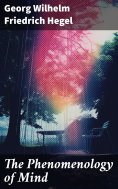
The Phenomenology of Mind (Annotated)


About the eBook
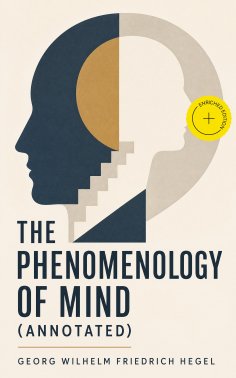
The Phenomenology of Mind is Hegel's monumental account of consciousness as it passes through successive shapes of experience toward self-knowledge, reason, spirit, religion, and absolute knowing. Written in a dense, dialectical prose that fuses philosophical argument with dramatic movement, the work stands at the summit of German Idealism and responds to Kant, Fichte, Schelling, Enlightenment rationalism, and post-Revolutionary history. Its famous analyses—master and bondsman, unhappy consciousness, ethical life, and revealed religion—make philosophy a narrative of Bildung, the education of consciousness itself. Georg Wilhelm Friedrich Hegel (1770–1831), formed by classical learning, Protestant theology, and the upheavals of the French Revolution and Napoleonic Europe, sought to understand freedom as a historical and rational achievement. His early theological and political concerns matured into a systematic philosophy in which thought, society, and history are intelligible as unfolding processes. The Phenomenology, published in 1807, introduced this ambition with unparalleled force. This book is essential for readers seeking the roots of modern continental philosophy, social theory, theology, and theories of recognition. Demanding but profoundly rewarding, it should be read slowly, with attention to its architecture and historical resonances.
This enriched edition has been carefully crafted to add value to your reading experience.
- A succinct Introduction situates the work's timeless appeal and themes.
- The Synopsis outlines the central plot, highlighting key developments without spoiling critical twists.
- A detailed Historical Context immerses you in the era's events and influences that shaped the writing.
- An Author Biography reveals milestones in the author's life, illuminating the personal insights behind the text.
- A thorough Analysis dissects symbols, motifs, and character arcs to unearth underlying meanings.
- Reflection questions prompt you to engage personally with the work's messages, connecting them to modern life.
- Hand‐picked Memorable Quotes shine a spotlight on moments of literary brilliance.
- Interactive footnotes clarify unusual references, historical allusions, and archaic phrases for an effortless, more informed read.
About the Author
Georg Wilhelm Friedrich Hegel (1770-1831) was a German philosopher and an important figure of German idealism. He achieved recognition in his day and—while primarily influential in the continental tradition of philosophy—has become increasingly influential in the analytic tradition as well. Although Hegel remains a divisive figure, his canonical stature in Western philosophy is universally recognized.
Related eBooks







Product Details
Publisher: e-artnow
Genre: Sprache - Englisch
Language: English
Size: 510 Pages
Filesize: 899.7 KB
ISBN: 4064066059224
Published: April 22, 2020