Approaches to an Antifragile Economy
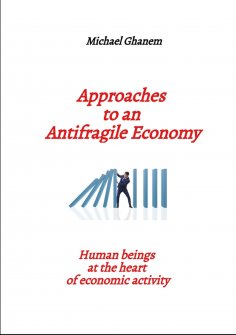


About the eBook
Digitalisation, electromobility, genetic engineering, Industry 4.0, artificial intelligence and other technological revolutions will take place in all areas of society and the economy, presenting us with enormous challenges.
Human labour will be most affected by this, as it will no longer be the same as before.
With the neoliberal orientation of the economy and the financial world that prevails today, this development will be impossible to manage. If no fundamental changes occur, large sections of society will become impoverished and the divide between rich and poor will continue to grow.
This threatens to lead to an increase in nationalist, politically xenophobic movements in Germany and Europe that call our democratic political system into question.
An economy of anti-fragility can mitigate these impending consequences and promote the resilience of the economic system. It sees people as the core of economic activity, not capital.
About the Author
Born in 1949, he grew up in France and graduated from an elite French university for industrial engineers. After moving to Germany, he studied economics, sociology, political science, philosophy and ethics. In the field of philosophy, he was strongly influenced by the philosophy and teachings of Zarathustra, Socrates, Plato, Aristotle, Marcus Aurelius, Rabelais, Michel de Montaigne, Baruch Spinoza, Thomas Aquinas, Ibn Khaldun, Niccolo Machiavelli, René Descartes, Blaise Pascal, Voltaire, Jean Jacques Rousseau, Immanuel Kant, Gottfried W. Leibniz, Auguste Comte, Arthur Schopenhauer, Pierre-Joseph Proudhon, Karl Marx, Henri Bergson, Karl Popper, Karl Jaspers, and Erich Fromm. In the field of economics, he was strongly influenced by post-Keynesians and behavioural economists. He is highly critical of the teachings of Milton Friedman, the Chicago Boys, the Frederick School and Friedrich A. Hayek. His professional career first took him to an international organisation, where he worked for five years as a project controller for major water projects, mainly in Africa, and thanks to this, he was able to get to know a large number of countries and their leaders. He then worked for many years for a European organisation and several international consulting firms. He considers himself a critic of current globalisation and has been strongly committed to water management and economics issues since 1974. These experiences have given him a deep understanding of geopolitical issues and enabled him to assess current political developments, particularly in the context of economic interdependencies. Since his retirement, he has been living a secluded life in Bonn and working as a writer. In his publications, he focuses primarily on the pressing social, economic and political issues of our time, as well as water management. To date, he has published numerous works on politics and geopolitics, society and economics. Other key topics include health, identity, racism, the environment, migration, water management, Africa, demographic development and alternative economic systems such as anti-fragility economics. He has also published several short stories and fairy tales.
Related eBooks

















Product Details
Publisher: tredition GmbH
Genre: Sprache - Englisch
Language: English
Size: 280 Pages
Filesize: 2.9 MB
ISBN: 9783384823892
Published: Feb. 12, 2026