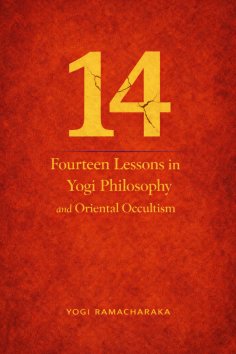
Fourteen Lessons in Yogi Philosophy and Oriental Occultism


About the eBook
Fourteen Lessons in Yogi Philosophy and Oriental Occultism (1904) is a foundational New Thought–era guide to practical yoga philosophy presented in fourteen short, progressive lessons. Written in a clear, didactic style for Western students, the book outlines a model of the human being as a layered entity: physical body, prana (vital force), astral body, mind, and spirit. Early lessons introduce the "seven principles of man," explaining how life energy and thought shape health and character. Midway, the lessons focus on mental discipline and the dynamics of thought, arguing that thoughts are real forces that create "thought-forms," influence others, and can be trained for concentration and willpower. Psychic capacities—telepathy, clairvoyance, psychometry, and "human magnetism"—are described as natural extensions of mind operating on subtler planes. Later lessons move into occult therapeutics and spiritual development, presenting karma-like "spiritual cause and effect" and the evolution of consciousness through higher states. The final lesson offers a threefold yogic path of attainment combining right living, meditation, and self-mastery, encouraging steady inner growth rather than quick miracles. Overall, the book blends Hindu-inspired concepts with early 20th-century metaphysics, aiming to provide a practical roadmap for self-knowledge, inner power, and spiritual awakening.
About the Author
"Yogi Ramacharaka" was the pen name of William Walker Atkinson (1862–1932), an American lawyer, editor, and leading figure in the New Thought movement. He wrote widely on mental science, yoga, and occult philosophy, adapting Hindu ideas for Western audiences through accessible, instructional works.
Related eBooks









Product Details
Publisher: Aroha
Genre: Sprache - Englisch
Language: English
Size: 100 Pages
Filesize: 974.0 KB
ISBN: 7502319079027
Published: Jan. 17, 2026