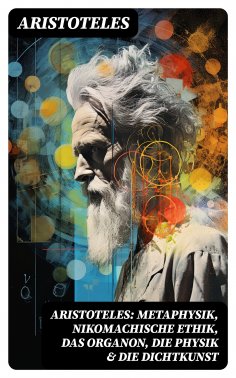
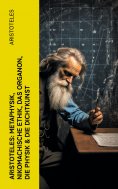
Aristoteles: Metaphysik, Nikomachische Ethik, Das Organon, Die Physik & Die Dichtkunst


About the eBook
In "Aristoteles: Metaphysik, Nikomachische Ethik, Das Organon, Die Physik & Die Dichtkunst," the esteemed philosopher Aristotle delves into the foundational elements of Western thought. This compendium encompasses his poignant explorations of metaphysics, ethics, logic, natural science, and poetics, showcasing a rigorous analytical style intertwined with profound philosophical inquiry. Each text exemplifies Aristotle's commitment to empirical observation and rational discourse, contextualizing the human experience within the framework of nature, ethics, and art—reflecting the intellectual currents of the Fourth Century BCE that prioritize reason as a pathway to knowledge. Aristotle, a pupil of Plato and tutor to Alexander the Great, is often heralded as the father of Western philosophy. His diverse body of work was shaped by his systematic study of the natural world and a desire to understand humanity's place within it. Aristotle's pragmatic approach serves not only as a critique of Platonic idealism but also as a lasting dialogue with the philosophical traditions that followed, influencing countless scholars and thinkers throughout history. This compelling anthology is an indispensable resource for those seeking a deeper understanding of philosophical principles that continue to inform contemporary thought. Readers interested in the interrelationships between ethics, logic, nature, and art will find Aristotle's works resonate with timeless relevance. A journey through these seminal texts invites reflection on the enduring questions of existence and morality.
In dieser bereicherten Ausgabe haben wir mit großer Sorgfalt zusätzlichen Mehrwert für Ihr Leseerlebnis geschaffen:
- Eine umfassende Einführung skizziert die verbindenden Merkmale, Themen oder stilistischen Entwicklungen dieser ausgewählten Werke.
- Die Autorenbiografie hebt persönliche Meilensteine und literarische Einflüsse hervor, die das gesamte Schaffen prägen.
- Ein Abschnitt zum historischen Kontext verortet die Werke in ihrer Epoche – soziale Strömungen, kulturelle Trends und Schlüsselerlebnisse, die ihrer Entstehung zugrunde liegen.
- Eine knappe Synopsis (Auswahl) gibt einen zugänglichen Überblick über die enthaltenen Texte und hilft dabei, Handlungsverläufe und Hauptideen zu erfassen, ohne wichtige Wendepunkte zu verraten.
- Eine vereinheitlichende Analyse untersucht wiederkehrende Motive und charakteristische Stilmittel in der Sammlung, verbindet die Erzählungen miteinander und beleuchtet zugleich die individuellen Stärken der einzelnen Werke.
- Reflexionsfragen regen zu einer tieferen Auseinandersetzung mit der übergreifenden Botschaft des Autors an und laden dazu ein, Bezüge zwischen den verschiedenen Texten herzustellen sowie sie in einen modernen Kontext zu setzen.
- Abschließend fassen unsere handverlesenen unvergesslichen Zitate zentrale Aussagen und Wendepunkte zusammen und verdeutlichen so die Kernthemen der gesamten Sammlung.
About the Author
Aristotle (384–322 BCE), a towering figure in ancient Greek philosophy, is an intellectual force whose works have profoundly influenced Western thought. Born in Stagira, Chalcidic, he was Plato's most prominent student at the Academy and later established his own school, the Lyceum, in Athens. Aristotle's contributions span a range of disciplines, including metaphysics, ethics, logic, and natural sciences. In 'Metaphysik,' he explores the concept of being and substance, forming the foundation of ontological studies for centuries to come. His 'Nikomachische Ethik' is a pivotal work in ethical philosophy, where he introduces his theory of virtue ethics, emphasizing character and flourishing as the ultimate goals of human life. 'Das Organon' comprises a series of books outlining his systematic approach to logic and syllogism, which remained the backbone of logical inquiry until the 19th century. 'Die Physik' reflects Aristotle's observations and theories concerning natural phenomena, shaping the scientific method. Furthermore, his 'Die Dichtkunst,' or 'Poetics,' provides seminal insights into literary theory, particularly his definitions of tragedy and the concept of catharsis. Collectively, Aristotle's works demonstrate a methodical approach to inquiry known as Aristotelian philosophy, characterized by empirical observations and logical analysis. His treatises found new audiences in the Islamic Golden Age and the European medieval period, ensuring his ideas would permeate numerous fields of study for generations.
Related eBooks




Product Details
Publisher: DigiCat
Genre: Sprache - Englisch
Language: English
Size: 1700 Pages
Filesize: 2.1 MB
ISBN: 8596547769446
Published: Dec. 30, 2023