Hegel: Lectures on Philosophy


About the eBook
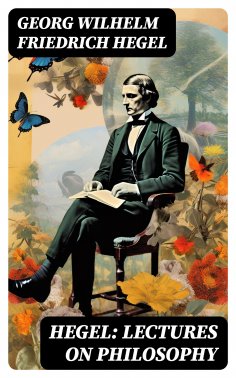
Georg Wilhelm Friedrich Hegel's "Lectures on Philosophy" serves as a profound exploration of philosophical thought, particularly in the realms of logic, nature, and spirit. Hegel employs a dialectical method that intertwines historical context with metaphysical inquiry, shaping a narrative that challenges readers to engage with the evolution of ideas. This work reflects Hegel's systematic approach to philosophy, emphasizing the interrelation of concepts and the progression of human consciousness. It is richly nuanced, offering insights into the development of modern thought and the complexities of reality, thus situating itself at a pivotal junction in the canon of Western philosophy. Hegel, a central figure in German idealism, was greatly influenced by the tumultuous socio-political landscape of his time. His engagement with Kantian philosophy, alongside the impacts of the Enlightenment and Romanticism, inspired him to articulate a comprehensive worldview that sought to reconcile individual freedom with universal principles. Hegel's background as a theologian and his extensive academic career reflect his dedication to preserving the intricacies of philosophical discourse, enabling readers to grasp the nuances of his thought. I highly recommend "Lectures on Philosophy" to anyone seeking a deeper understanding of Hegelian philosophy and its implications for contemporary thought. This text is an invaluable resource for students, scholars, and general readers alike, inviting engagement with foundational concepts that continue to resonate within various fields of inquiry, from political theory to existentialism.
In this enriched edition, we have carefully created added value for your reading experience:
- A comprehensive Introduction outlines these selected works' unifying features, themes, or stylistic evolutions.
- The Author Biography highlights personal milestones and literary influences that shape the entire body of writing.
- A Historical Context section situates the works in their broader era—social currents, cultural trends, and key events that underpin their creation.
- A concise Synopsis (Selection) offers an accessible overview of the included texts, helping readers navigate plotlines and main ideas without revealing critical twists.
- A unified Analysis examines recurring motifs and stylistic hallmarks across the collection, tying the stories together while spotlighting the different work's strengths.
- Reflection questions inspire deeper contemplation of the author's overarching message, inviting readers to draw connections among different texts and relate them to modern contexts.
- Lastly, our hand‐picked Memorable Quotes distill pivotal lines and turning points, serving as touchstones for the collection's central themes.
About the Author
Georg Wilhelm Friedrich Hegel (1770-1831) remains a towering figure in the landscape of Western philosophy. Born in Stuttgart, Germany, Hegel initially studied theology before shifting his intellectual trajectory towards philosophy. His profound contributions to the fields of metaphysics, epistemology, political theory, and aesthetics cemented his legacy as a pivotal contributor to German Idealism. Hegel's dialectical method, which proposes that the evolution of ideas and historical progress are shaped through a process involving thesis, antithesis, and synthesis, has been influential beyond philosophy, impacting the development of various disciplines. In his seminal work, 'Phenomenology of Spirit' (1807), Hegel explores the development of human consciousness and self-awareness, leading to his more mature system of absolute idealism. His other notable works include 'Science of Logic' (1812-1816), 'Encyclopedia of the Philosophical Sciences' (1817), and posthumously published 'Lectures on the Philosophy of History,' 'Lectures on Aesthetics,' and 'Lectures on the Philosophy of Religion.' Hegel's intricate and often impenetrable prose has proven challenging for scholars, necessitating numerous interpretations to unpack his comprehensive philosophical system. Despite such complexities, his impact is undiminished; Hegel's dialectic heavily influenced Karl Marx and Marxism, while his conceptions of the state and civil society were formative in political philosophy. Hegel's works continue to provoke scholarly discourse, underscoring the enduring significance of his philosophical contributions.
Related eBooks



Product Details
Publisher: DigiCat
Genre: Sprache - Englisch
Language: English
Size: 1838 Pages
Filesize: 2.4 MB
ISBN: 8596547766933
Published: Dec. 28, 2023