Letters of Dionysius the Areopagite


About the eBook
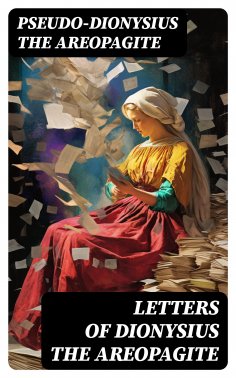
In the "Letters of Dionysius the Areopagite," the author, often referred to as Pseudo-Dionysius, engages in a profound exploration of the relationship between the divine and the human, emphasizing the importance of hierarchy and participation in the celestial order. Written in a rich, mystical style, these letters draw heavily from Neoplatonic philosophy while incorporating Christian theological concepts, creating a unique synthesis that has influenced both medieval theology and mysticism. The work is situated within a broader literary context of late antiquity, offering readers profound insights into the spiritual dimensions of existence and the progression toward divine union. Pseudo-Dionysius, possibly a late 5th or early 6th-century Christian theologian, was shaped by the intellectual milieu of his time, which blended elements of Greek philosophy and early Christian thought. His enigmatic identity, often conflated with the biblical figure Dionysius the Areopagite, amplifies his authority and moral weight in addressing theological issues. His inclination towards profound metaphysical inquiry likely stemmed from a desire to articulate the ineffable nature of God, resulting in a lifelong commitment to mystical dialectics and religious experience. Readers seeking an enriched understanding of the intersection between faith and reason, as well as the complexities of divine hierarchies, will find the "Letters of Dionysius the Areopagite" to be an invaluable resource. This seminal work not only invites contemplation on the nature of God but also serves as a foundational text for those interested in the tradition of Christian mysticism and theological discourse.
In this enriched edition, we have carefully created added value for your reading experience:
- A comprehensive Introduction outlines these selected works' unifying features, themes, or stylistic evolutions.
- The Author Biography highlights personal milestones and literary influences that shape the entire body of writing.
- A Historical Context section situates the works in their broader era—social currents, cultural trends, and key events that underpin their creation.
- A concise Synopsis (Selection) offers an accessible overview of the included texts, helping readers navigate plotlines and main ideas without revealing critical twists.
- A unified Analysis examines recurring motifs and stylistic hallmarks across the collection, tying the stories together while spotlighting the different work's strengths.
- Reflection questions inspire deeper contemplation of the author's overarching message, inviting readers to draw connections among different texts and relate them to modern contexts.
- Lastly, our hand‐picked Memorable Quotes distill pivotal lines and turning points, serving as touchstones for the collection's central themes.
About the Author
Pseudo-Dionysius the Areopagite is an influential and enigmatic figure in the history of Christian theology and philosophy whose corpus emerged in the late 5th to early 6th century. While little is known about the true identity of this author, the name adopted refers to Dionysius the Areopagite, a Biblical figure converted by St. Paul in Athens as described in the Acts of the Apostles. Pseudo-Dionysius is famed for his formulation of mystical theology, which deeply integrates Neoplatonic thought with Christian dogma, framing the divine as an unfathomable transcendental One, beyond being and knowledge. The corpus attributed to him includes works like 'The Celestial Hierarchy,' 'The Ecclesiastical Hierarchy,' 'The Divine Names,' 'The Mystical Theology,' and the collection 'Letters of Dionysius the Areopagite,' which sheds light on his thoughts and interpretations of Christian mysticism. His works have profoundly influenced the Eastern Orthodox and Western Churches, especially through their Latin translations by John Scotus Eriugena in the 9th century. Pseudo-Dionysian writings are characterized by a distinct literary style that employs apophatic theology—the practice of describing God by negation—asserting that one can only come to know God by recognizing what He is not. This paradoxical method has led to the Pseudo-Dionysian works being studied and revered as guidebooks on the soul's journey towards union with the ineffable Divine.
Related eBooks


Product Details
Publisher: DigiCat
Genre: Sprache - Englisch
Language: English
Size: 30 Pages
Filesize: 799.6 KB
ISBN: 8596547726647
Published: Nov. 19, 2023